if you were raised
in the VHS era of fitness, welcome home.
HI, I’M JENN! RELATABLE, AND TRUE…
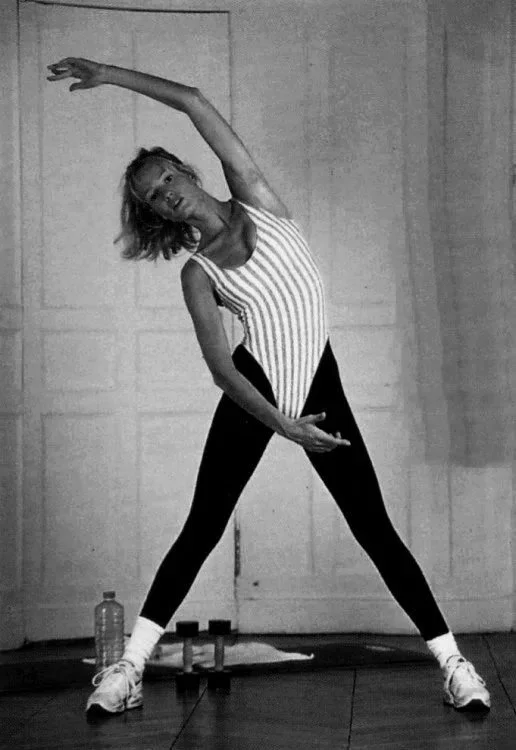
Cindy Crawford and Billy Blanks were my first personal trainers.
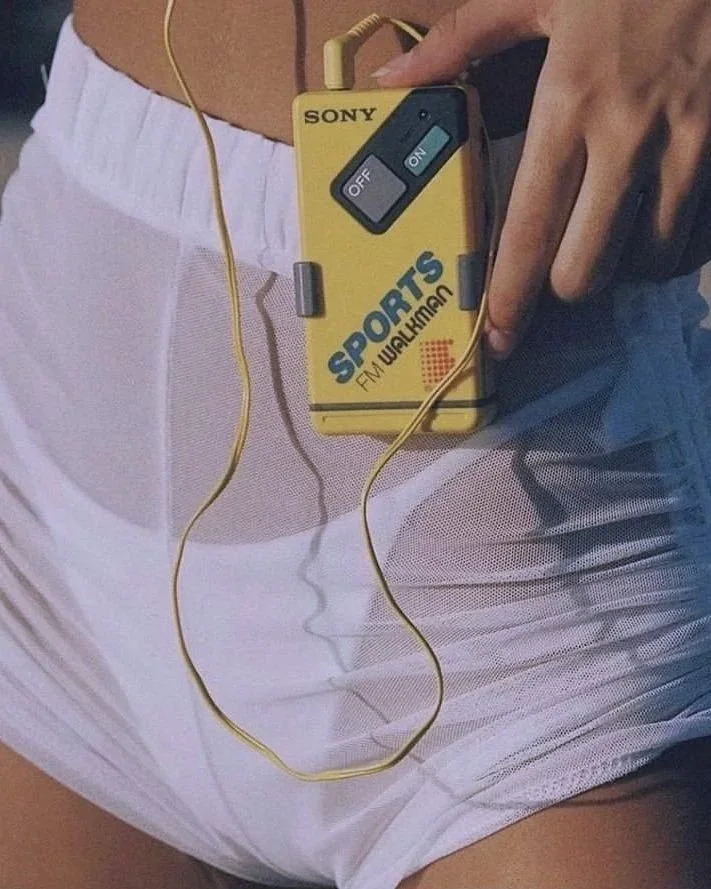
If you were raised in the VHS era of fitness — Buns of Steel, Tae Bo, Cindy Crawford — you are my people. If you ever drank a Slimfast for breakfast, got seduced by TIU’s Seven Day Slim Down or burned through an entire ink cartridge printing Kayla Itsines’ BBG PDF… welcome home.
Because if that’s your fitness origin story, you’re probably on the same corner of the internet I’m on — the one where every post has something to say about our bodies. (I especially love it when it's coming from a 22‑year-old “certified hormone specialist,” or a man who thinks all of our problems are solved by eating fewer calories.) The advice for women 40+ is relentless, but don’t worry! Obey the advice of these internet strangers, and maybe— just maybe —you’ll postpone metabolic shutdown and menopause for a few more years. 🙄
I see things differently. Your 40s aren’t doom, decline, or whatever else the internet screams. You don’t have to fade out or settle when it comes to how your body looks, feels, and functions — but this season does ask something more of you. Not more rules, gadgets, or restrictions, but… a deeper relationship with yourself. A deeper way of moving + inhabiting your body. That’s the work I do.
But before we talk about the work I do now, we probably need to take a little stroll down memory lane and talk about the work I used to do. Some of it, I’m really proud of. Some of it makes me question my life choices.
I spent decades in the industry, working with thousands of women — as a personal trainer, group fitness instructor, nutritionist (the queen of green smoothies), and wellness coach. I believed, with every fiber of my being, that if you wanted to change your body, it came down to optimization and control. Dial the food in. Dial the workouts in. Tighten the plan. Push harder. My methodology was simple: if your body wasn’t responding, if you weren’t seeing the results you dreamed of, you just hadn’t found the right combo of diet and exercise yet. My job was to help you find it. To keep tweaking your macros, pushing your workouts, refining the plan. In hindsight, I trusted the system more than the person inside the body. (*major cringe*)
For a long time, that approach worked. Like most systems built on control, it worked until one day it didn’t. A few years ago, I got sick and after that… my body stopped responding to the methods I’d spent decades perfecting. I watched my body change, and not in ways that felt good or familiar. And for the first time, I was out of moves. My diet was healthy. My workouts were on point, per usual. I was doing everything right. So… what was happening?
The internet had an answer, of course. It was age. Apparently once you cross into your forties, the female body just opts out? Hormones go sideways, metabolism disappears, end of story. You’re supposed to nod, accept it, move on. I didn’t buy it. Not even a little. To me, it felt like I was being handed the laziest story available— it’s your age —so no one had to bother looking any deeper.
By some brilliant twist of fate, at the exact same time my body was supposedly falling apart thanks to my advanced age of forty-three (deep sarcasm), I was also back at university studying anthropology.
And anthropology — unexpectedly — changed the way I looked at my body. If you’re thinking, wait… anthropology? Fair. But anthropology isn’t about bones in a museum. It’s about humans. How we live. How we move through our days. How culture, environment, stress, food, connection and disconnection, shape the body over time. Instead of obsessing over how to fix my body, anthropology taught me to ask a far more useful question: what is my body responding to in the first place?
And this is why anthropology belongs in the wellness industry. Anthropology doesn’t start with “What’s wrong with you?”—which just happens to be the most profitable question diet culture has ever asked. Anthropology starts somewhere else entirely. It starts with context. It wants to know what you’re marinating in all day. The pace you’re keeping. The stress you’ve learned to call normal. It wants to know what your body has been quietly enduring, day after day.
Diet culture would love you to believe that bodies just fall apart in their forties. Poof. Expired. Time to panic and purchase the solution. Anthropology tells a much less hysterical story. It assumes your body is intelligent. That it’s paying attention. That it’s responding to people, pressure, pace, environment, stress, artificial rhythms, and a world that asks far more of you than it ever did before. Bodies don’t just fall apart out of nowhere. They adapt. They compensate. They communicate.
Anthropology teaches us to listen.
“Just listen to your body, babe.”
If someone had said that to me at the peak of my body struggles, I would have absolutely lost my sh*t. I know what it feels like to hear something airy-fairy when you’re deep in an uphill health battle, or trying to understand why your body is holding onto weight no matter what you do.
When you’re in that place, vague advice doesn’t feel soothing — it feels dismissive.
So let me be very clear about something. When I talk about listening to your body, I am not talking about the version you’ve probably seen modeled in modern wellness culture. This isn’t about skipping the work, “tuning in,” lighting a candle, and hoping the universe melts the fat off your body. I’m not here to gaslight you with good vibes only, or teach you how to manifest a perfect metabolism.
And honestly, when you look at the examples we’ve been given, it makes complete sense why it’s so hard to break up with diet-culture tactics — even when we know they aren’t good for us, or telling the whole story. “Listen to your body” has been sold without structure, without science, and without anything to hold onto. We’re logical beings. We know that if we want abs, they’re coming from work ethic, not wishful thinking.
So if “listen to your body” hasn’t worked for you, that’s not a personal failure. I get it. It’s failed for me too. It fails because it’s presented as a vibe, and not a system. When you’re someone who values effort, discipline, and results, that kind of advice feels flimsy next to macro calculations, workout programs, and protocols that promise results + certainty.
After decades inside the wellness industry, and years studying and researching the body through the lens of anthropology, something finally landed for me: listening to your body isn’t abstract. It’s literal. The body is already speaking in clear, distinct languages; but modern wellness culture tends to talk over it.
In wellness, the body speaks in very specific, very familiar ways. You already know these sensations. Energy — or the sudden lack of it. Libido, or the absence of it. Desire… or that flat, muted feeling where it used to be. If we’re honest, most of us are far more familiar with the sensation of what’s missing, than what’s flowing.
The body also speaks in appetite. Warmth. Sensuality. Sweat. The feeling of muscles firing and doing what they’re meant to do. These sensations may come and go, but they aren’t insignificant. They’re data — physiology reporting in real time.
This is the foundation of Body Language.
My work focuses on sensation — yes — but more importantly, the science underneath it: what sensation is actually telling you. Through decades of experience, research, and observation, I’ve outlined six core wellness languages: movement, nourishment, light, pleasure, beauty, and the language of weight (because weight is never “just weight”— it’s a story your body will repeat until it’s heard).
When you’re fluent in these languages, you don’t need to micromanage yourself into results. You understand what the body needs. Your responses improve. Self-care naturally upgrades. And change shows up without force.
the languages of aliveness
-
![]()
Movement
BEYOND STEP COUNTS + STATS
Your body does not crave a calorie burn or a step count; it craves the sensation of being alive. Heat building in your core, sweat dripping, legs shaking, hips moving. We have turned exercise into an act of endurance, waiting for the metric to be met. This movement is the antidote. It is an invitation to stop tracking and start sensing. To stay. To move. To feel it all.
-
![]()
Nourishment
SEDUCE THE SENSES
Have you noticed that most nutrition strategies are just different ways to say no? Less carbs, fewer calories, suppressed appetite. Are we done with this yet? True nourishment isn't about the math of restriction; it’s about the art of fulfillment. It’s the deep, sensory satisfaction of a body that is finally fueled in a way that honors your physiology and delights your senses. Stop tracking. Start tasting. -
![]()
Pleasure
YOUR INTERNAL COMPASS
We’ve been taught that pleasure is an indulgence or a distraction, but what if it is the pathway? When you move through your rituals without delight, discipline becomes a cage. We eventually break out, return to what feels good, and call it “falling off the wagon.” I call it GPS. Pleasure is data. Ultimately, it’s what makes consistency doable. (Humans always come back to what they love.) You don’t have to choose between your pleasure and your goals. Don’t fear the pleasure. Let it lead. -
![]()
Light
AN ELECTRIC RESET
Contrary to your favorite influencer, your body does not run on protein — it runs on light. We evolved under cycles of light and dark that clock every hormone, enzyme, and repair cycle in your system. But today, we live in "indoor exile," staring at screens from dawn until dusk. We blame perimenopause for our slowing metabolisms and stubborn weight, but circadian disruption is the silent thief. By starving ourselves of natural light, we’ve uncoupled our biology from its power source. You don’t need another supplement. You need to step into the sunrise.
-
![]()
Weight
A RECORD OF PROTECTION
We’ve been taught that extra weight is a flaw to be erased, but what if it’s a record of protection? Your body doesn’t store weight to spite you; it stores it to save you. In a world of chaos and chronic stress, your body is simply using its ancient intelligence to build a buffer against perceived threats. That "stubborn" weight is bubble wrap. You don’t have to fight your way out of this. (You can’t.) When you soothe the nervous system and restore a sense of safety, the body no longer needs the shield. It’s not about losing weight; it’s about finally feeling safe enough to let it go.
wellness hot takes
-
Calling beauty “shallow” is just another way women get taught to dim themselves. We’re told that wanting to feel beautiful somehow makes us morally bankrupt or drowning in internalized patriarchy. But, beauty is one of the oldest languages on Earth. It’s the way nature signals vitality. The real problem is the industry selling women a distorted, synthetic, impossible Benjamin Button fantasy and convincing us we’re failing without it. Real beauty is biological. You radiate your own unique code of beauty when you are nourished, sunlit, rested, expressed, and fully alive.
-
Wellness culture loves to romanticize “ancestral living,” but it forgets the part where our ancestors were just trying to, like…not die. Fasting, ketosis, cold exposure — these were adaptations to environment or scarcity, not necessarily signs of ideal physiology. If they’d had warmth, nourishment, and options, they would’ve taken it. So why are we voluntarily pushing stressed, inflamed, exhausted modern bodies into survival states in the name of “health”? These tools have their place, but calling them universal pathways to thriving makes no sense.
-
I see weight as a language — your body communicating something physiological, emotional, or protective. If you’re carrying weight that no longer feels like yours, or it keeps returning, consider this: weight is a story your body will repeat until it feels heard. Modern culture wants you to override it, shrink it, fix it fast, pretend it’s a simple math problem… but you and I both know that whatever you rush, restrict, or punish your way through always comes back. The real question isn’t “How do I lose this quickly?” It’s “What would make my body feel safe enough to let go?” (And you’re in the right place for that answer.)
-
We do not need more information. (*said the woman who just asked you to read 27 pages of her origin story*)
Studies stacked on studies. Saved posts we’ll never revisit. Wellness influencers quoting clinical trials. A new study and podcast to review every single day. Research is great. I love data, patterns, evidence. But somewhere along the way, we decided that external information mattered more than our own innate intelligence. You do not need a study to tell you that morning sunlight is good for you. You go outside and feel it. The softness. The warmth. The way your nervous system settles before your mind catches up. That sensation is the evidence you’re searching for. It’s biology. It’s physiology flipping switches, firing pathways, setting off cascades of hormonal and metabolic signals—no permission slip from PubMed required. And yet modern wellness keeps training us to override that knowing. To research instead of respond. To collect information instead of embodying. We don’t have an information problem. We have an implementation problem. An embodiment problem. And it’s making us disconnected, exhausted, and strangely afraid of our own experience.
There are a million coaches out there…
here’s why it will feel different to work with me.
You won’t be treated like a body to fix. You’ll be met as a whole human — biology, history, habits, nervous system, desires, dislikes and all.
I come to this work as both an anthropologist and a longtime insider of the wellness industry. I know all the protocols. I also know how easily they turn into cages. So we use structure, yes — but only in conjunction with sensation.
What makes this different is that we don’t start with one-size-fits-all rules, templates, or “perfect plans.” We start with context. With your life. Your rhythms. Your constraints. Your patterns. We ask, what is your body responding to right now? and what is it asking for? Then we build from there.
You can expect:
clarity without overwhelm.
science without coldness.
sensuality without woo.
challenge without punishment.
support without dependency.
By the time we’re done, you won’t just have new habits. You’ll have a new relationship with your body. One built on trust, fluency, and the quiet confidence that comes from finally understanding the language it’s been speaking all along.